
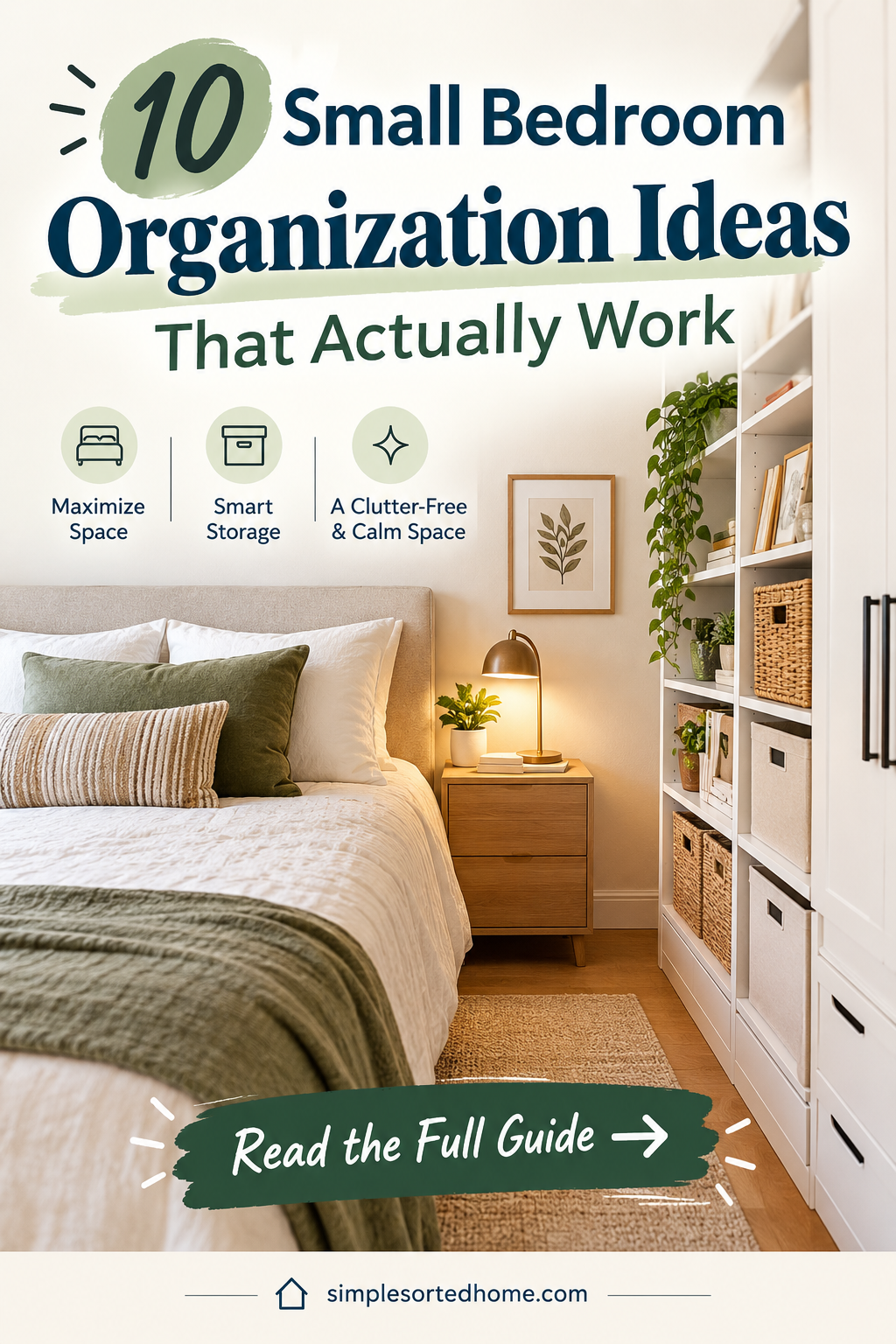
These 10 small bedroom organization ideas focus on practical changes you can actually see in the examples, including better furniture placement, vertical storage, under-bed containers, built-in solutions, and simple ways to control everyday clutter.
A small bedroom can hold a lot more than you might expect, but the wrong layout can make the space feel cramped fast. The good news is that getting organized does not always mean buying more furniture.
Sometimes, simply moving a piece of furniture, making better use of an empty wall, or giving your existing storage a clear purpose can make a noticeable difference.
Some ideas take only a small adjustment, while others involve planning storage around the way you use the room.
Some changes take just a few minutes, while others may require a little more planning. Either way, the goal is the same: make your bedroom easier to move around in, easier to keep tidy, and more comfortable to live in.
Here are 10 small bedroom organization ideas to help make a small bedroom feel more organized, comfortable, and easier to live in.
1. Move the Dresser Back to Fix a Door Clearance Problem
A dresser can provide valuable storage, but that does not mean it is in the right place. In the first example, the dresser is positioned so close to the door that the open door bumps into it, making the entrance feel cramped.
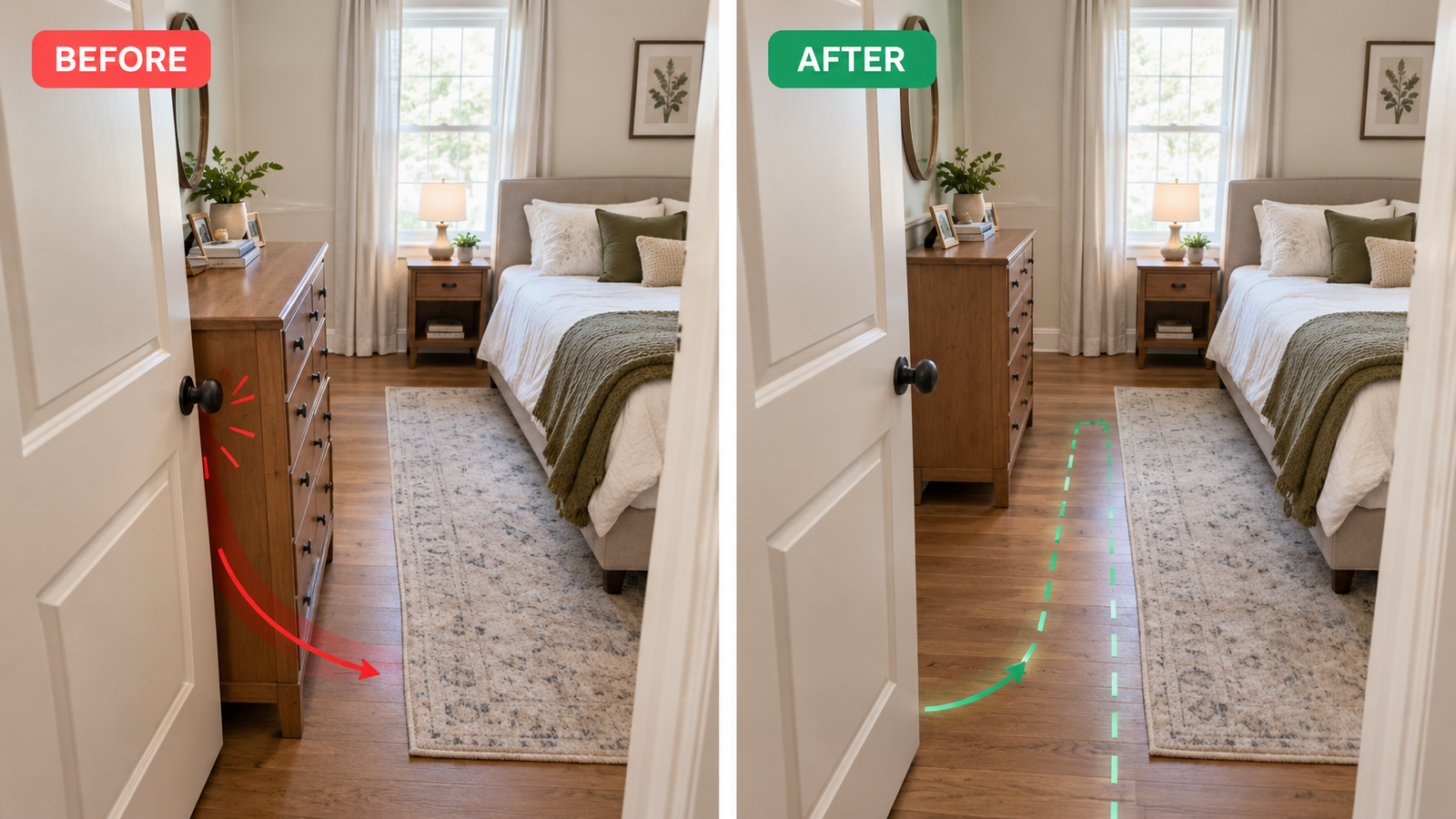
The solution is surprisingly simple: move the dresser farther away from the door’s swing path. This creates a more comfortable walkway without replacing the furniture or completely rearranging the room.
Notice that the rest of the layout stays almost the same. The bed, nightstand, rug, and dresser remain in their basic positions. The improvement comes from giving the doorway more breathing room.
When organizing a small bedroom, start by looking at how you enter and move through the room. Even a few extra inches of clearance can make the space feel much easier to use.
💡 Quick Tip
Before moving furniture, open the bedroom door fully and check its entire swing path. Keep that area clear before deciding where storage pieces should sit.
2. Give Every Part of the Bedroom a Clear Purpose
Another effective approach is to divide the bedroom into practical zones instead of depending on one large storage solution.
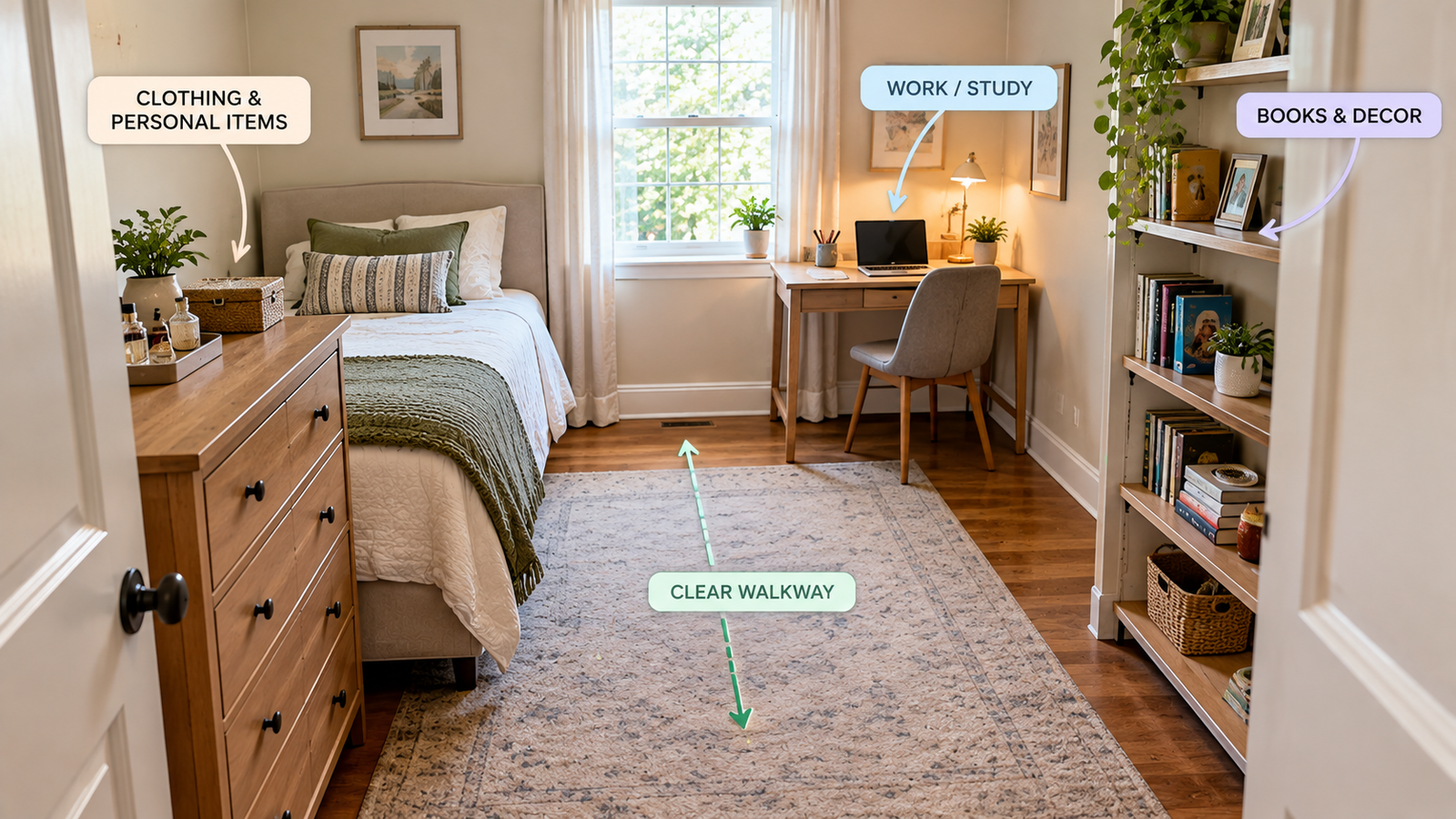
In this example, the room has a bed, dresser, desk, shelves, and storage containers. Each area has a specific purpose, which helps prevent clothes, books, paperwork, and other belongings from ending up wherever there happens to be space.
A simple setup could look like this:
- Drawers: Keep clothing and smaller personal items here.
- Desk: Store only the things you need for work, school, or hobbies.
- Shelves: Use them for books, plants, and a few decorative items.
- Open floor: Keep this area as clear as possible for easy movement.
This works particularly well when your bedroom has to serve several purposes. You do not necessarily need to get rid of your belongings.
Instead, give each storage area a job so everything has a logical place to go.
Organizing zones to copy
3. Use Under-Bed Bins and Rolling Carts for Hidden Storage
Not all storage needs to be out in the open. In fact, some of the best storage in a small bedroom may be hiding underneath your bed.
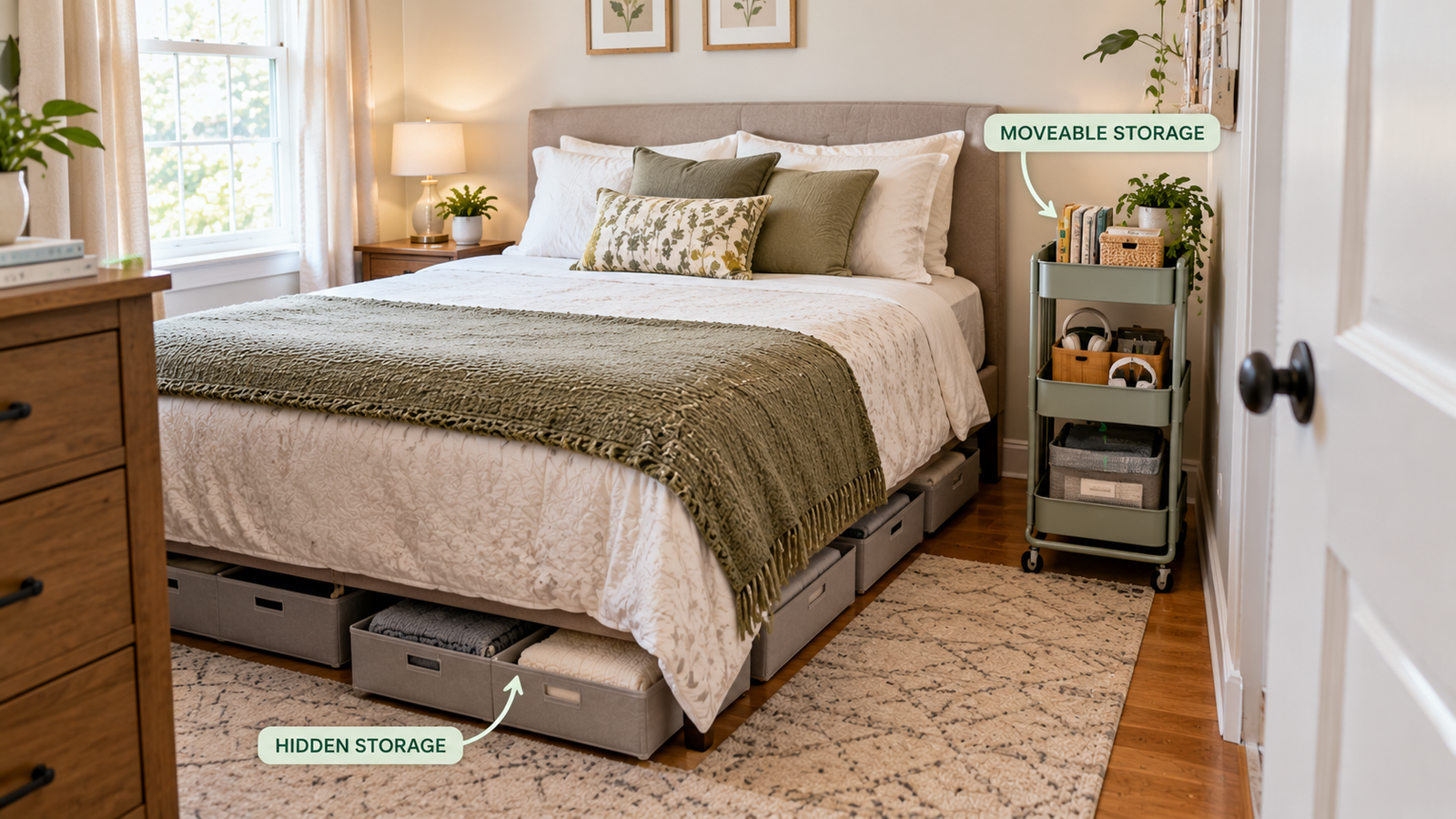
Low storage bins can fit beneath the bed and make use of space that would otherwise go unused.
Nearby containers can keep smaller categories organized, while a rolling cart provides flexible storage that you can move around whenever necessary.
The real advantage here is the combination of hidden and movable storage.
Under-bed bins are ideal for things you do not need every day, such as extra clothing, seasonal items, or spare linens.
A rolling cart works better for things you use more often because you can easily move it closer when needed.
Before buying new containers, measure the space you already have. Check the height underneath your bed and the width of any narrow gaps.
Choosing storage that fits properly will save you from creating another organization problem.
4. Turn One Wall Into Floor-to-Ceiling Storage
When floor space is limited, look up.
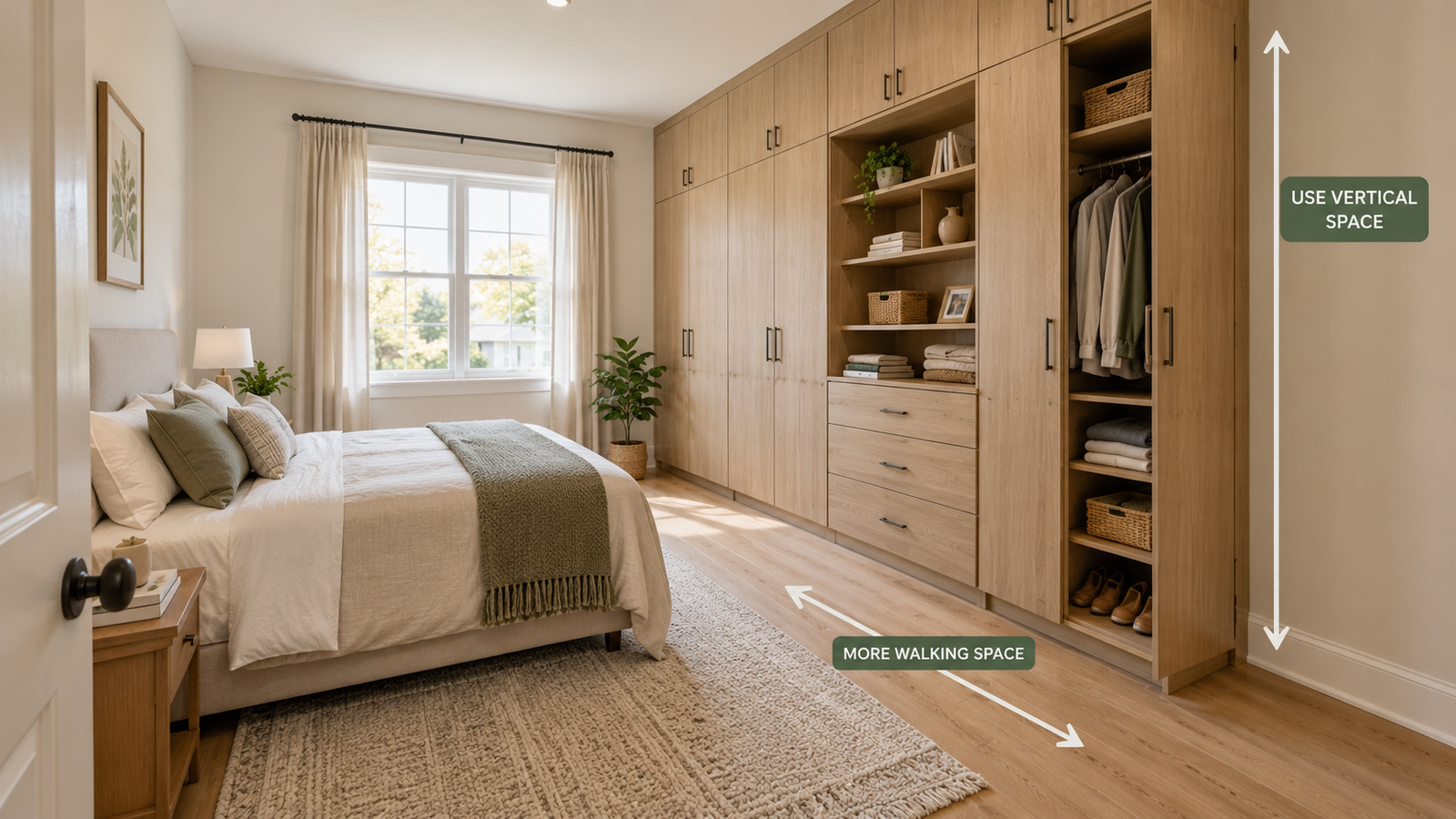
This example shows how concentrating storage along one wall can make a small bedroom feel more open.
Tall wardrobes and cabinets use the room’s vertical space while leaving more of the floor available for walking and everyday activities.
Instead of placing several smaller storage pieces around the room, consider whether one relatively open wall could handle most of your storage needs.
This approach can also make the room look less cluttered because the furniture is grouped together instead of scattered throughout the space.
If you have an unused wall, think about how much storage you could add by going upward rather than outward.
Storage is spread around the room, using valuable floor space in several places.
One wall handles more storage while the rest of the bedroom stays open and easier to move through.
5. Give Every Bedroom Function Its Own Zone
A small bedroom sometimes has to do more than provide a place to sleep. It may be a place to sleep, get dressed, study, work, relax, and watch TV.
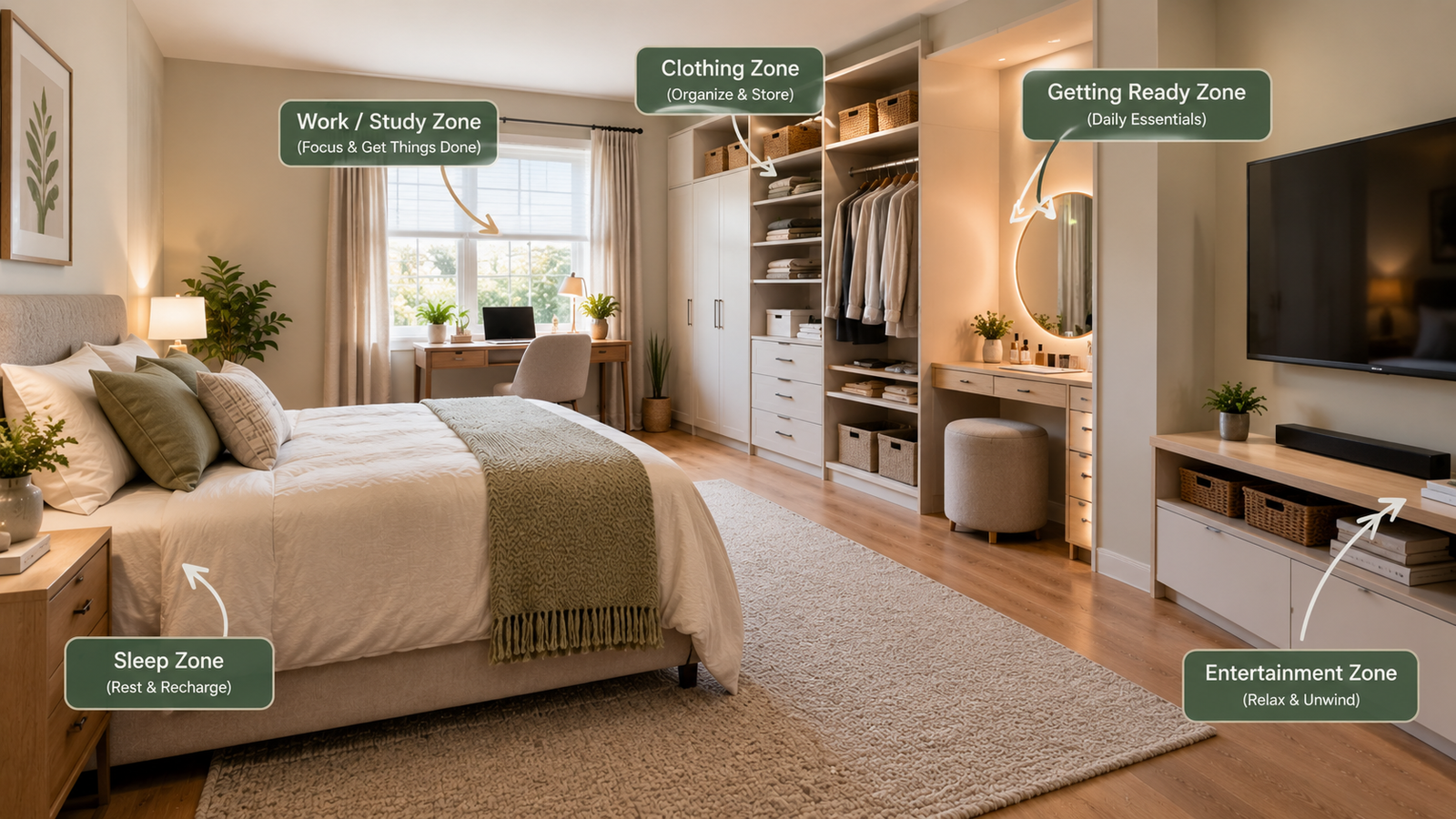
The trick is not to squeeze every possible feature into the room. Instead, decide what you actually use the space for and give each function its own area.
A simple planning check
- 🛏️ Sleep: Keep the bed area comfortable and easy to access.
- 👕 Clothing: Give everyday clothes a dedicated storage spot.
- 🪞 Getting ready: Keep frequently used personal items together.
- 💻 Work or study: Choose a compact desk instead of a bulky table.
- 📺 Entertainment: Keep screens and accessories from taking over useful surfaces.
Once each part of the room has a purpose, it becomes much easier to notice furniture that is taking up valuable space without really helping you.
6. Use Vertical Shelves to Add Storage Without Losing Floor Space
A long shelf above the bed can turn an otherwise empty wall into useful storage and display space.
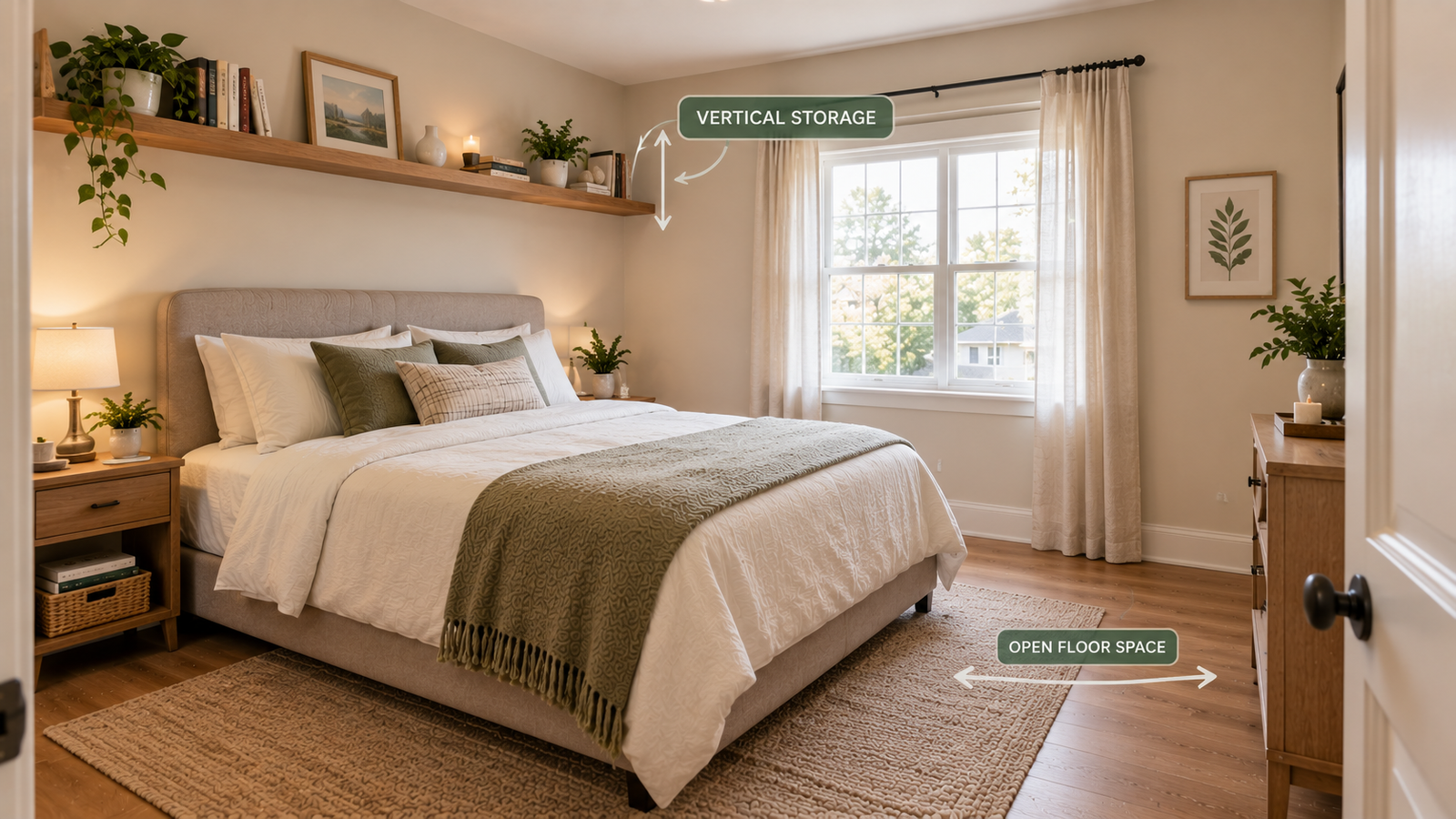
Instead of adding another cabinet or table to the floor, this example uses the wall for books, plants, and small decorative items. It is a simple way to add storage without making the room harder to walk through.
For a small bedroom, look at your walls before buying another piece of furniture. Vertical storage can give you surprisingly useful space while keeping the floor open.
Good candidates for higher shelves
- 📚 A few books
- 🪴 Small plants
- 🖼️ Lightweight decorative pieces
- 🕯️ Small accent items
Keep heavier or frequently used items within easy reach.
Higher shelves are best for lightweight belongings that you do not need to grab throughout the day a comfortable height.
Higher shelves are better for lighter things you do not need to grab constantly.
Find an unused section of wall above furniture or beside the bed.
Add a shelf that fits the wall without making the room feel crowded.
Use it for lighter items while keeping the floor clear for movement.
7. Use Matching Baskets and Boxes to Control Small Clutter
Open shelves are useful, but they can quickly start looking messy when lots of small items are left sitting out.
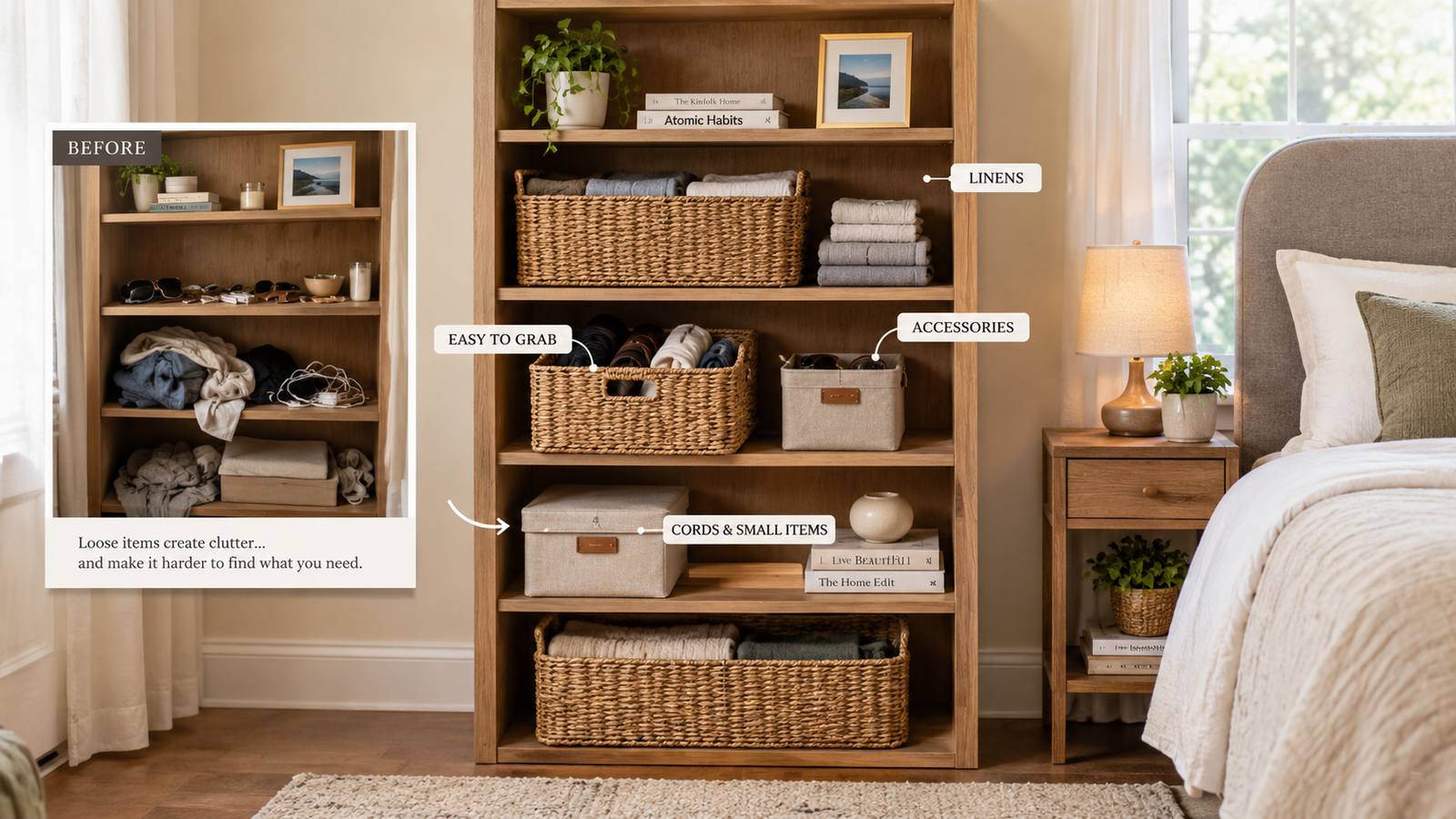
This example uses baskets and boxes to solve that problem. Instead of having accessories, folded clothing, or miscellaneous items spread across the shelves, each group gets its own container.
Containers are also helpful on deeper shelves. Rather than digging through a pile of individual items, you can simply pull out one basket and find what you need.
Try grouping things based on how you actually use them. One basket might hold accessories, another could store extra linens, and a smaller box could keep cords and other small items together.
The goal is simple: keep fewer loose items in sight and make cleanup easier.
8. Build Storage Into the Furniture Instead of Adding More Pieces
TThe Next example takes a more built-in approach, which can work especially well in a very small bedroom.
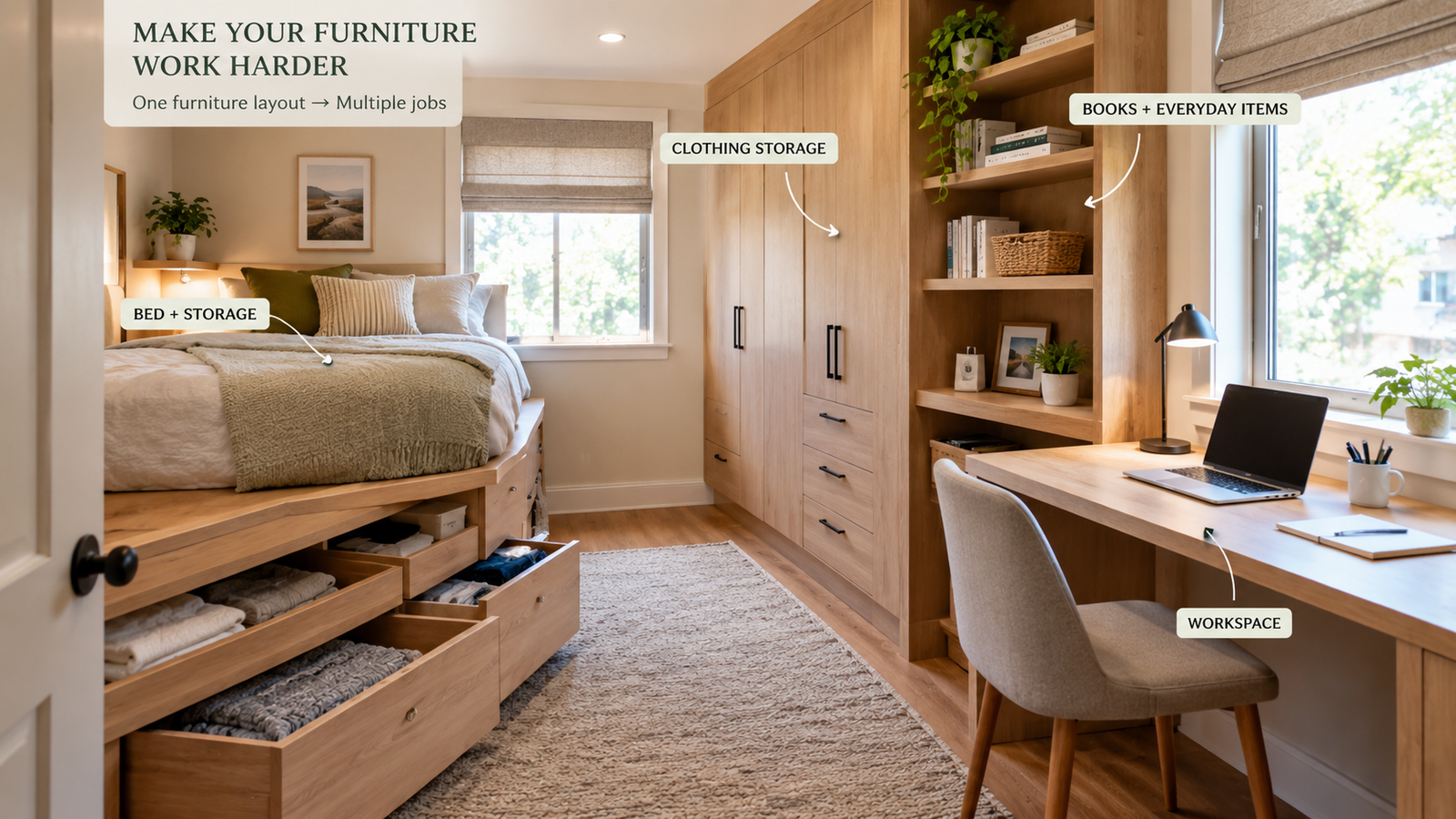
A raised bed creates storage space underneath, while cabinetry continues around the room. A long desk makes use of the wall near the window, and open shelving provides an easy place for books and everyday items.
The biggest advantage is that one furniture layout can handle several different jobs. Sleeping, studying, clothing storage, and book storage can all fit into the same room without requiring a separate cabinet or table for every purpose.
Built-in storage can be particularly helpful when a bedroom has awkward corners, unusual dimensions, or very little floor space.
The layout at a glance
- 🛏️ Raised bed: Uses the space underneath for storage.
- 👕 Closet cabinets: Keep clothing organized and contained.
- 💻 Long desk: Turns the window wall into a useful work area.
- 📚 Open shelves: Keep books and everyday items easy to reach.
The main lesson is worth remembering: make your existing furniture work harder before adding more furniture.
Instead of filling the room with separate storage pieces, the design combines sleeping, clothing storage, studying, and book storage into the existing furniture footprint.
9. Add Hooks to an Empty Wall
Walls are valuable storage space in a small bedroom.
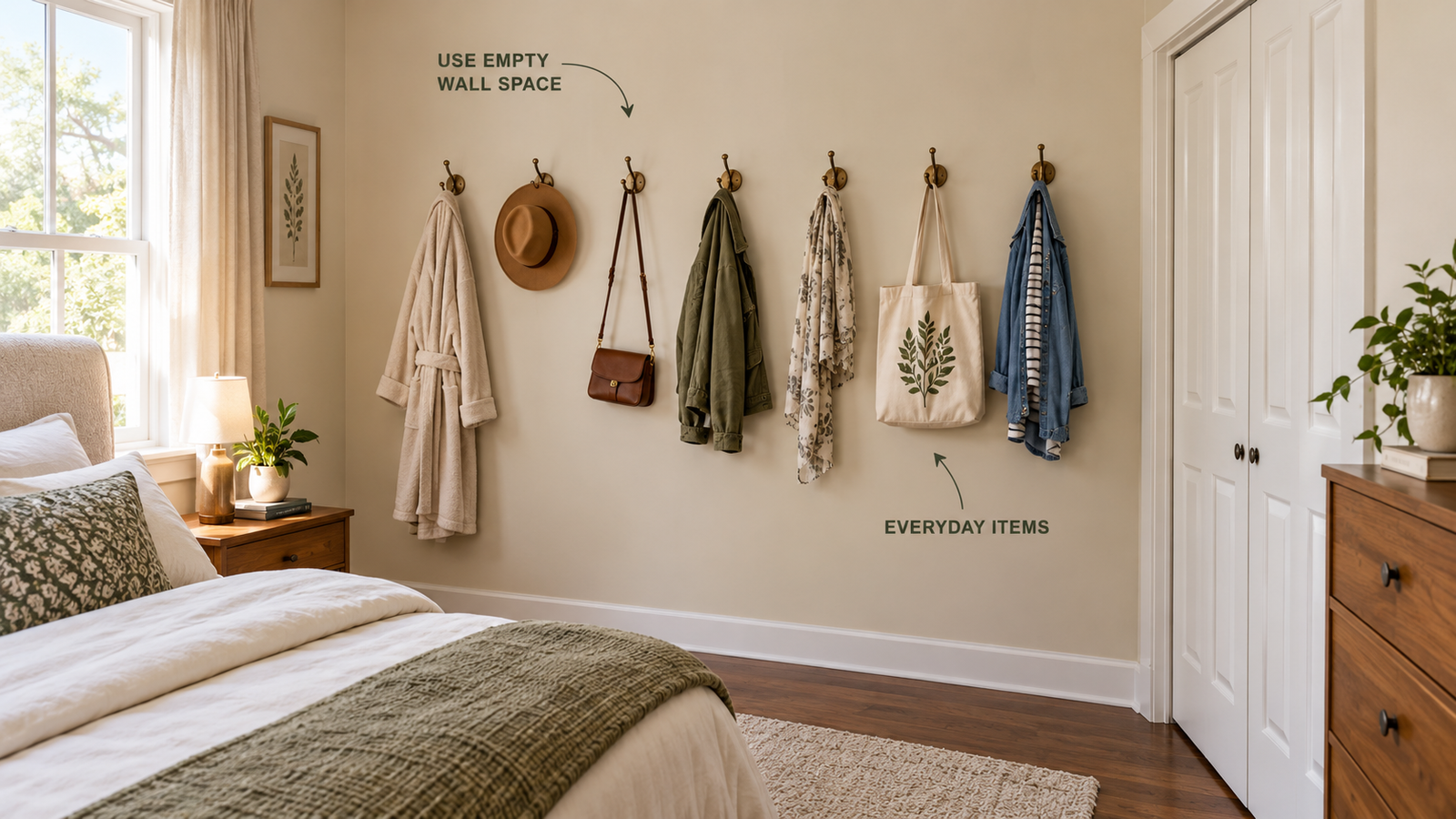
Install a few decorative hooks behind the door, beside the closet, or on an unused section of wall. They’re perfect for items you use often but don’t want lying across a chair or bed.
Great things to hang
- Robes
- Hats
- Purses
- Jackets
- Scarves
- Tote bags
- Tomorrow’s outfit
Choose hooks that complement your bedroom instead of making the wall look like a storage room.
Recommendation: Use not damage wall hooks
Small-space tip: Place everyday items at an easy-to-reach height. Keep less-used items higher up.
10. Replace a Bulky Nightstand With a Slim Shelf
A traditional nightstand can take up more floor space than you realize.
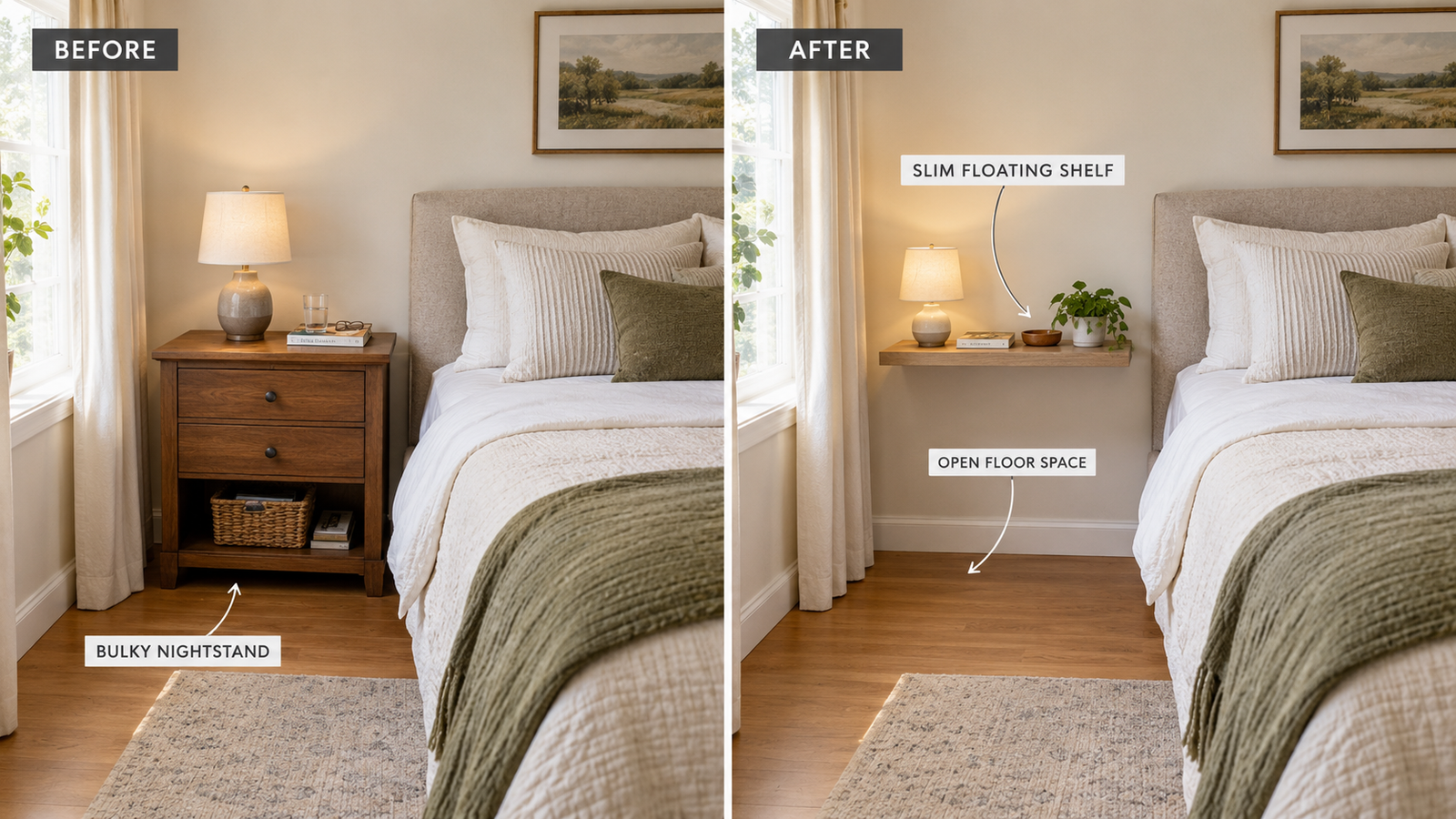
If your bedroom is especially tight, try a narrow floating shelf beside the bed instead. It gives you a place for a phone, book, lamp, or glass of water without adding another large piece of furniture.
A small wall-mounted shelf can also make the floor feel more open.
Keep the shelf simple
Try limiting it to three or four everyday items:
Lamp + book + small tray + plant
That’s enough to make the space functional without creating another clutter zone.
Table of Contents
A Simple Small Bedroom Organization Ideas
You don’t need to buy dozens of organizers to make a small bedroom work better.
Start with these five principles:
- 1. Store vertically.
Use walls, tall shelves, and closet height. - 2. Hide bulky items.
Use under-bed and closed storage for things you don’t need every day. - 3. Reduce furniture.
Choose pieces that provide more than one function. - 4. Give everything a home.
Small items need designated storage too. - 5. Keep the floor clear.
An open floor instantly makes a small bedroom feel more spacious.
Conclusion
The best small bedroom organization ideas aren’t necessarily complicated. They’re the ones that make everyday life easier.
Organizing a small bedroom does not have to involve complicated systems or expensive furniture.
As these examples show, a few thoughtful changes can make the room much easier to use without filling it with even more stuff.
Start with the biggest problem. If the door is blocked, adjust the furniture. If the floor feels crowded, look for vertical or under-bed storage.
If clutter keeps coming back, give your baskets, drawers, and shelves specific jobs.
And if your bedroom needs to serve several purposes, look for furniture that can do more than one thing.
Start with one small change and see how much of a difference it makes. You can always build from there.