
A 1-hour home reset gives you a simple cleaning routine to tackle the mess without trying to do everything at once. With a little planning, you can move from room to room, take care of the most noticeable mess, and make your space feel cleaner and more comfortable.
The trick is to focus on what makes the biggest difference. Collect clutter first, refresh the kitchen and bathroom, wipe the surfaces you use most, and finish with the floors. You may not get every corner spotless, but you can make your home feel fresher, more organized, and easier to manage in just 60 minutes.
Whether you live in a small apartment or a busy family home, the following routine gives you a practical starting point. Adjust the time for each task to fit your space and focus on progress rather than perfection.
Summary of 1-Hour Home Reset Given below :-
Table of Contents: 1-Hour Home Reset
1. Start With a 10-Minute Whole-Home Pickup
Before reaching for cleaning products, remove the clutter that makes your home look untidy. Cleaning around scattered belongings wastes time, and you may end up wiping the same surface twice.
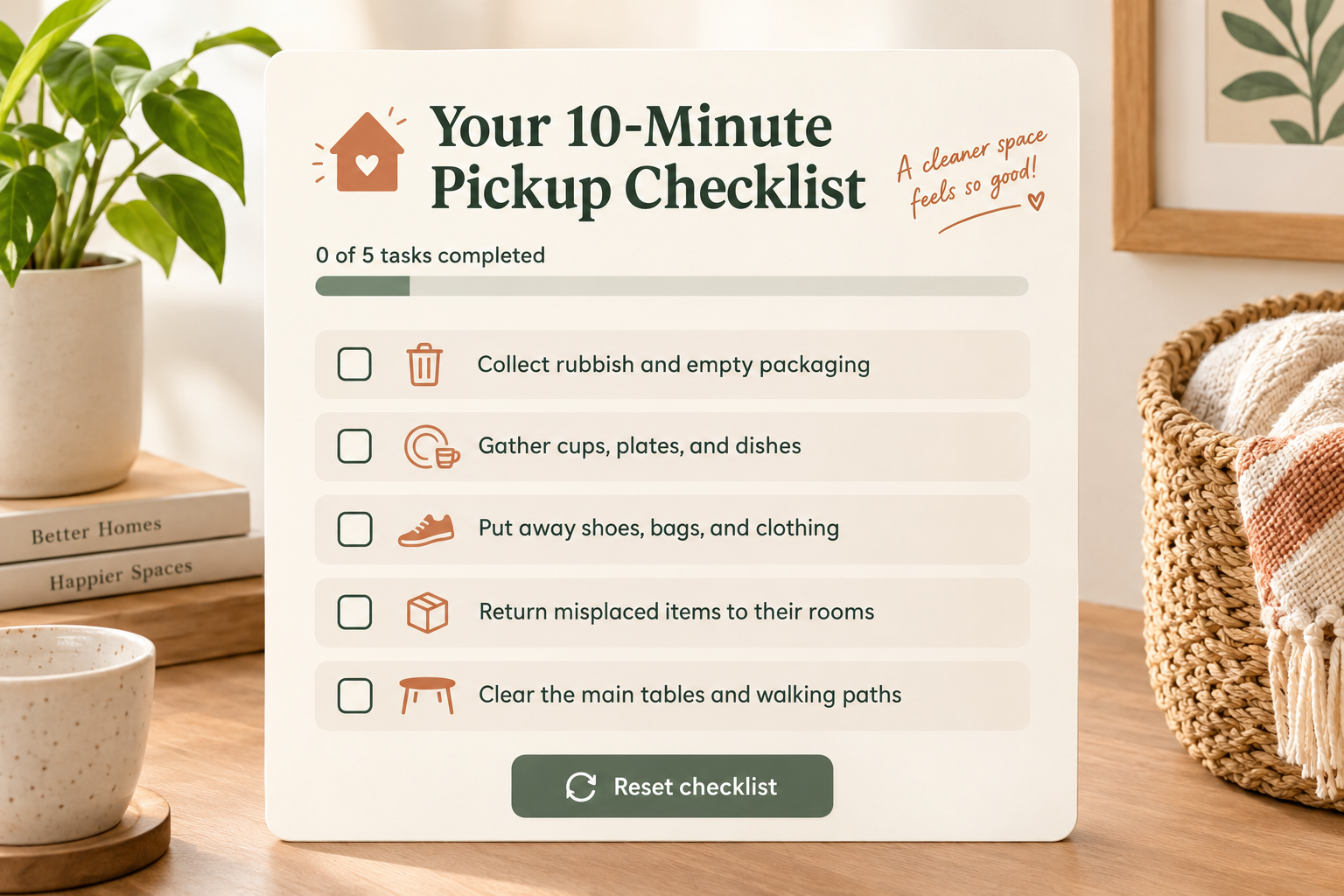
Grab a laundry basket or an empty tote and walk through the main living areas. Collect things that belong in other rooms, pick up obvious trash, return shoes to the entryway, and put away blankets and cushions.
Keep moving instead of stopping to organize every item you find. If you discover a drawer full of miscellaneous objects, leave it for another day.
Quick tip: Carry a basket as you move between rooms. It is faster than making several trips to put away individual items.
Also Read: How to Clean Your Closet in 15 Minutes
2. Spend 15 Minutes Refreshing the Kitchen
The kitchen often deserves early attention because it is used throughout the day. A clear counter, an empty sink, and a clean dining table can make the whole home feel more orderly.
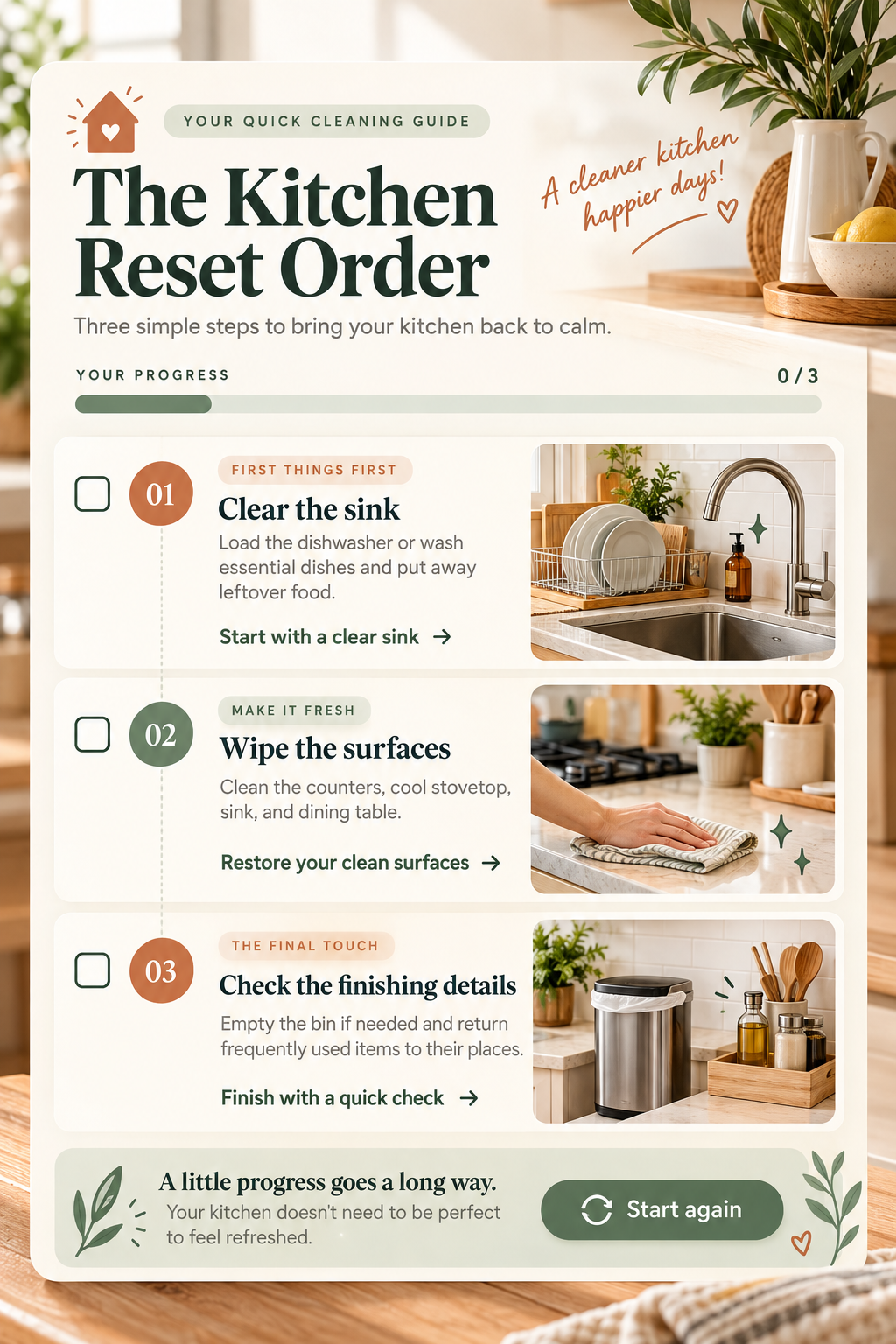
Start by loading the dishwasher or washing the most important dishes. Put away food, wipe the counters and stovetop once they are cool, and clean the sink. Finish by wiping the dining table and replacing the kitchen towel if needed.
You do not need to clean the oven, empty every cupboard, or reorganize the pantry during this reset. Save those jobs for your regular deep-cleaning schedule.
3. Give the Bathroom 10 Minutes of Attention
A quick bathroom clean is about keeping the most frequently used surfaces fresh. You do not need to scrub every tile or deep-clean the shower during a one-hour reset.
Focus on the toilet, sink, faucet, mirror, and visible splashes. Replace a used hand towel and remove empty packaging from the counter. If the floor is visibly dirty, include a quick sweep or mop when time permits.
Use separate cloths or tools for the toilet and other bathroom surfaces. Follow each cleaning product’s label, ventilate the room as directed, and never mix cleaning chemicals. Regularly cleaning household surfaces helps remove dirt and germs.
Bathroom Quick-Clean Checklist
A simple routine for a fresher, tidier bathroom.
4. Spend 10 Minutes Tidying the Living Room and Bedrooms
The rooms where you relax and sleep do not need a complete makeover every time you reset your home. Concentrate on the details that make them look neat and feel comfortable.
In the living room, fold blankets, straighten cushions, clear the coffee table, and return remote controls and books to their usual places. In the bedrooms, make the beds, put dirty clothes in the laundry basket, and clear the bedside tables.
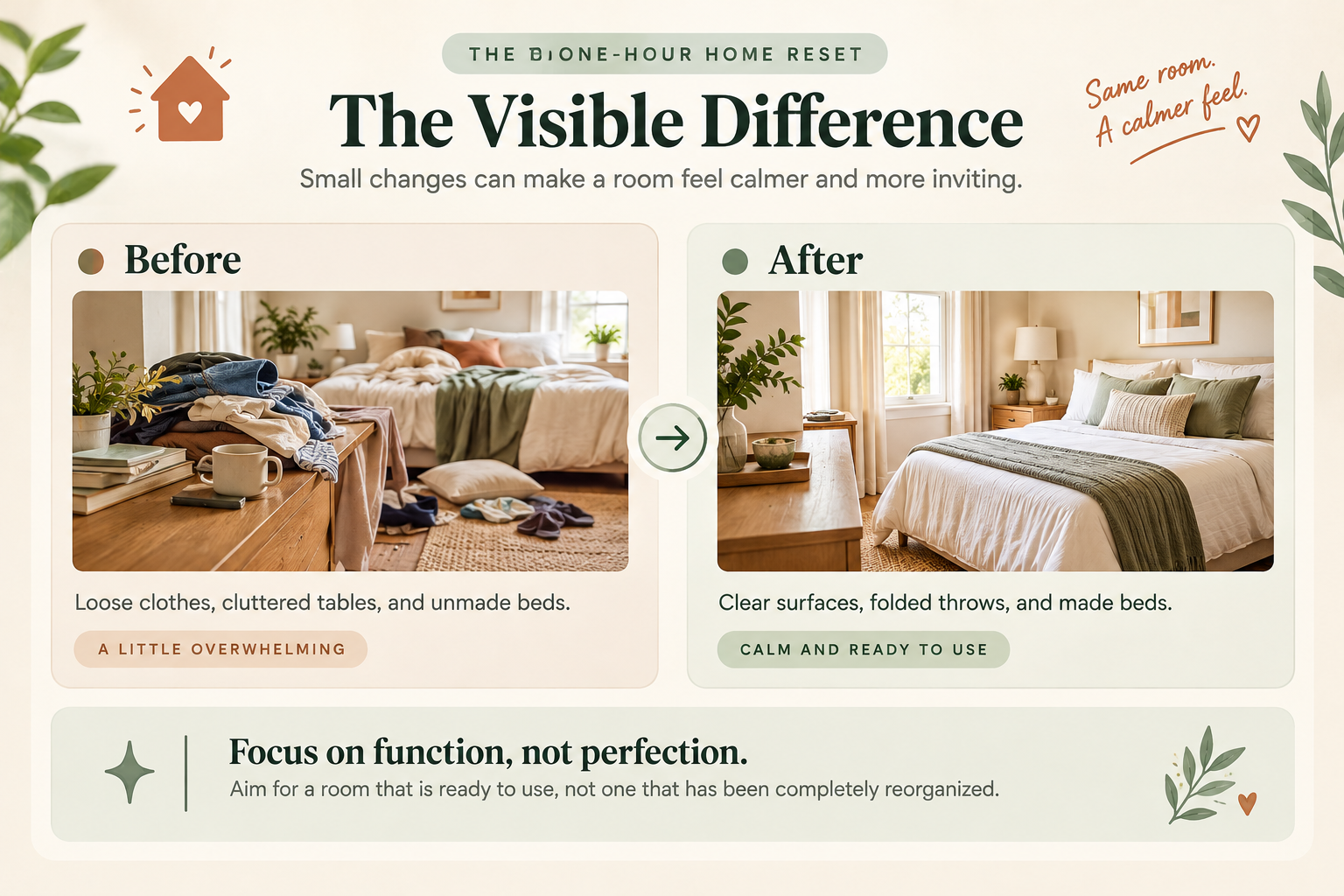
If you have several bedrooms, give priority to the rooms used most often. A quick tidy is more useful than opening every closet and creating new piles to sort.
5. Use 10 Minutes to Wipe High-Use Surfaces
Now that the clutter is under control, work through the main surfaces in your home. Use a suitable microfiber cloth and the right cleaner for each material.
Prioritize coffee tables, dining tables, kitchen counters that still need attention, visible fingerprints, and frequently touched spots such as door handles and light switches. Avoid spending these minutes polishing decorative items or cleaning shelves that are already reasonably tidy.
Surface-Cleaning Priority List
Focus on what matters most during your one-hour home reset.
Quick-reset tip — Prioritize visible, frequently used surfaces first. Detailed dusting can wait until you have more time.
6. Finish With 5 Minutes on the Floors and a Final Check
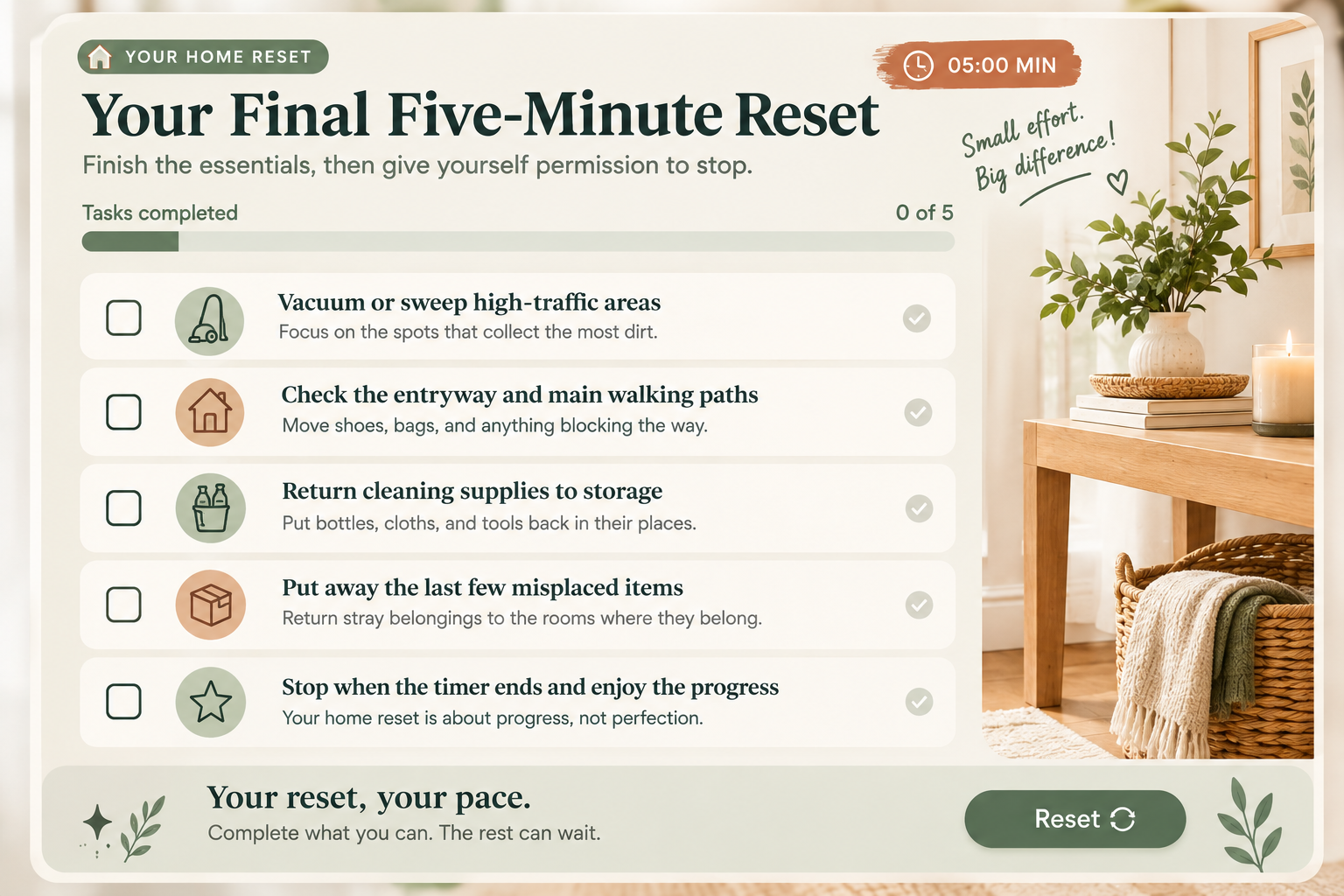
Use your last five minutes to make the main walking areas look cleaner. Sweep or vacuum visible dirt, crumbs, and dust from the busiest parts of the home. If time is left, spot-clean a visibly dirty patch of floor.
Do not start mopping every room if you cannot finish safely within the time available. Wet floors need time to dry, and you should keep people and pets away from slippery areas.
How to Make Your 1-Hour Home Reset Easier to Maintain
The best cleaning routine is one you can repeat without feeling exhausted. A few small habits can make your next reset much quicker.
- Keep supplies together. Store your everyday cloths, gloves, and suitable cleaners in one easy-to-reach place.
- Clean as you go. Put dishes away after meals and return items to their usual spots.
- Use a timer. Give each task a clear stopping point so one room does not take up the entire hour.
- Share the work. If other household members are available, assign rooms or tasks to them.
- Separate deep cleaning. Schedule jobs such as cleaning inside the oven, washing windows, and sorting closets for another day.
Your complete 60-minute cleaning schedule
Your Complete 60-Minute Cleaning Schedule
Follow the order, focus on one task at a time, and check off each block as you go. Keep moving rather than aiming for perfection.
Collect loose items, return belongings to their rooms, and clear the main walking paths.
Load or wash dishes, wipe the counters, clean the sink, and straighten visible items.
Wipe the sink and mirror, tidy toiletries, and quickly clean the toilet and faucet.
Fluff cushions, fold throws, straighten bedding, and return misplaced items.
Clean frequently touched handles, switches, tables, and other commonly used surfaces.
Clean high-traffic floors, put supplies away, and enjoy the difference you made.
Conclusion
A cleaner home does not have to require hours of work every day. With a simple 1-Hour Home Reset, you can focus on the mess that matters most, refresh the rooms you use frequently, and make your space easier to enjoy.
Remember to pick up clutter first, give the kitchen and bathroom priority, and leave deep-cleaning projects for another time. If you cannot finish everything in an hour, that is fine. Adjust the schedule to suit your home and keep the routine realistic.
Start with one reset this week, then repeat it whenever your home needs a fresh start. Save this routine for the next time you want to get your home back in order without spending the whole day cleaning.
Frequently Asked Questions
-
What is the one hour cleaning rule?
The one-hour cleaning rule means setting aside a fixed 60-minute period to tidy and clean your home rather than allowing chores to continue indefinitely.
You divide the hour between priority tasks, such as picking up clutter, cleaning the kitchen and bathroom, wiping surfaces, and refreshing the floors.
Some people use the hour for a whole-home reset, while others dedicate an hour to one room each day. Both approaches can work -
How do you clean your whole house in 1 hour?
Start with a timer and work through the most important tasks in a fixed order. Avoid deep cleaning and focus on visible dirt, clutter, and high-use areas.
Follow this simple plan:
10 minutes: Collect rubbish, dishes, laundry, and misplaced items.
15 minutes: Clean the kitchen sink, counters, dishes, and dining table.
10 minutes: Refresh the toilet, sink, faucet, and bathroom mirror.
10 minutes: Make beds and tidy the living room and bedrooms.
10 minutes: Wipe high-use surfaces and visible dust.
5 minutes: Sweep or vacuum the main walking areas.
For a large or particularly messy home, concentrate on the rooms you use most.
One hour is generally better suited to maintenance cleaning than a full deep clean. -
What is the 5-5-5 rule for cleaning?
The 5-5-5 cleaning rule is an informal cleaning technique, and its meaning can vary depending on the version being used.
One version involves three five-minute tasks: spend five minutes decluttering, five minutes wiping surfaces, and five minutes tidying a chosen area.
Another variation focuses on finding five items to put away, five to discard, and five to donate. -
What is the home reset method?
The home reset method is a routine for returning your home to a clean, organized, usable condition after the everyday activities that create mess. It usually involves clearing clutter, putting items back in their places, cleaning essential surfaces, handling dishes and laundry, and preparing the space for the next day.
A reset is different from deep cleaning. You focus on restoring order rather than scrubbing every corner or reorganizing every cupboard.
You can do a quick reset each evening, a longer reset once a week, or a one-hour reset whenever your home starts to feel out of control. Choose a routine that fits your household and repeat it regularly. -
What is the 6/10 rule for cleaning houses?
The 6/10 cleaning method commonly refers to a schedule of six daily cleaning tasks and ten weekly cleaning tasks.
A practical example might look like this:
Daily tasks: Make the beds, wash dishes, wipe kitchen counters, tidy clutter, handle laundry as needed, and sweep obvious mess.
Weekly tasks: Vacuum floors, clean bathrooms, change bed linens, dust furniture, mop floors, clean mirrors, empty bins thoroughly, refresh the fridge as needed, clean kitchen appliances’ exterior surfaces, and tidy the entryway.
Adjust the list to suit your household. You may not need to do every task every day, and some chores will depend on whether you have children, pets, or high-traffic areas. -
What will happen if we do not clean the house for 5 days?
If you do not clean your house for five days, you may notice more dust, crumbs, dirty dishes, laundry, unpleasant odors, and clutter. How much builds up depends on the number of people living there, cooking habits, pets, ventilation, and the activities taking place.
Five days without general cleaning does not automatically make a home dangerous or unhygienic. However, certain tasks should not be delayed if there is a specific problem.
Kitchen: Leftover food and dirty dishes can develop odors and attract pests.
Bathroom: Damp surfaces and unclean fixtures may develop buildup, while persistent moisture can encourage mold.
Living areas: Dust, crumbs, and pet hair can collect on surfaces and floors.
High-touch surfaces: Handles, switches, and counters can accumulate dirt and germs.