
These 10 Simple Decluttering Ideas for Every Room focus on practical habits and storage solutions you can adapt to your own home.
You’ll learn how to declutter drawers before organizing them, use baskets more effectively, make better use of vertical space, and create simple systems for everyday belongings.
Whether you’re working with a small bedroom, a busy living room, or a crowded pantry, start with one manageable area. Keep the things you use, give them a sensible place, and make it easier to put them away again.
The aim isn’t to make your home look like a showroom. It’s to create a space that feels comfortable, functions well, and takes less effort to maintain.
10 Simple Decluttering Ideas for Every Room
Table of Contents 10 Simple Decluttering Ideas for Every Room
1. Recognize the Small Habits That Make Clutter Build Up
Clutter often starts with small decisions that seem harmless at the time. An old shirt stays in the closet because it might fit again. Free promotional items collect in drawers, and empty containers take up shelf space because they could be useful someday.
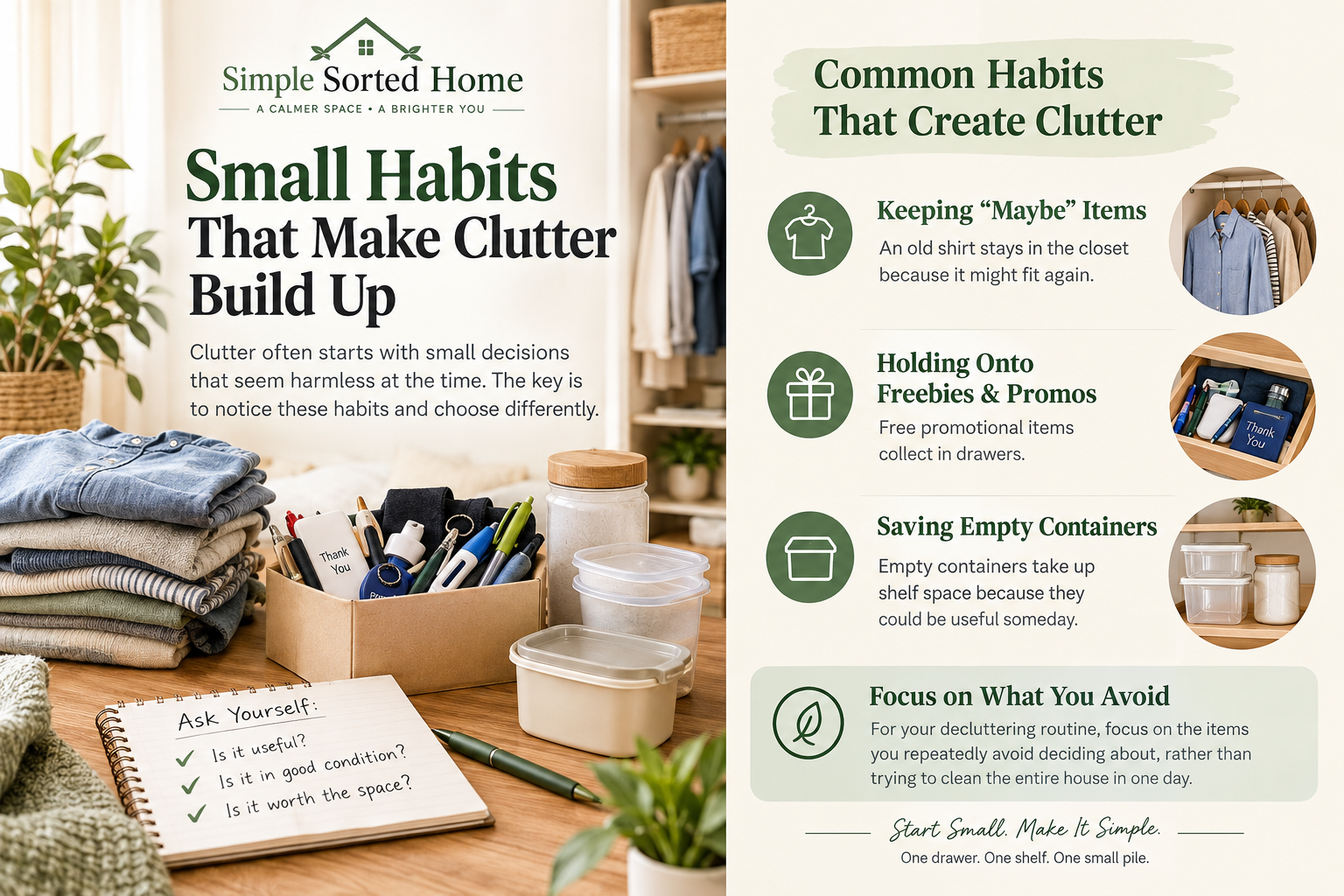
These common habits that can make it harder to keep a home organized. For your decluttering routine, focus on the items you repeatedly avoid deciding about, rather than trying to clean the entire house in one day.
Start with one drawer, one shelf, or one small pile. Ask yourself whether each item is useful, still in good condition, and worth the space it occupies.
Here are a few habits worth checking first:
- Old clothes: Donate or recycle items you no longer wear, where appropriate.
- Broken belongings: Repair them by a realistic deadline or let them go.
- Expired products: Check dates and dispose of products according to their labels.
- Paper piles: Keep important records and securely discard unnecessary paperwork.
- Duplicate supplies: Keep the amount you can reasonably use and store.
A helpful rule: Before buying another storage basket, check whether you can reduce the number of items you need to store.
💡 Quick Tip
Choose one clutter habit to change this week. Small, repeatable decisions can make everyday tidying easier to manage.
Quick Decluttering Check
Use this checklist while working through one small area of your home.
2. Declutter Your Bedroom by Removing Items You No Longer Need
A bedroom feels easier to manage when everything has a purpose and the surfaces are not crowded. The several common sources of bedroom clutter, from old shoes and unused decorations to piles of paper and overflowing nightstands.
🧹 Your Bedroom Decluttering Checklist
Start with the items that take up space or make everyday routines harder.
👟 Shoes & Clothing
☐ Remove unused shoes
☐ Sort unworn clothes
☐ Prepare donations
🧴 Small Items
☐ Check old toiletries
☐ Gather loose cables
☐ Remove duplicates
🛏️ Bedroom Surfaces
☐ Clear the nightstand
☐ Sort paperwork
☐ Remove unused decor
💡 Quick tip: Finish one category before moving on to the next.
Start with one small category instead of emptying the entire room. Check your closet for clothes you no longer wear, look through your bedside table, and remove empty boxes taking up valuable storage space.
Here are the main areas to tackle first:
- Shoes and clothing: Keep the pairs you wear and donate clean clothes in good condition that no longer fit your needs.
- Beauty products and toiletries: Check expiry dates and dispose of products according to their labels.
- Bedding and decorations: Replace worn-out essentials when needed and remove decor that only collects dust.
- Everyday clutter: Sort loose cables, duplicate items, broken belongings, and unnecessary paperwork.
Work through one category at a time. You will find it easier to make decisions without creating a bigger mess in the middle of your bedroom.
3. Follow the Right Order to Declutter and Clean Every Room
Decluttering feels less overwhelming when you follow a clear order. These simple 10-step routine that starts with removing unwanted items and ends with the finishing touches that make a room feel fresh.
🌸 The 10-Step Room Reset
Work from clearing clutter to adding the final details.
REMOVE
Declutter, sort, and clear surfaces.
CLEAN
Dust high areas, wipe surfaces, then clean floors.
RESET
Organize belongings, straighten furniture, and add simple decor.
💡 Remember: Remove the clutter before cleaning, and finish with the floors.
Begin by collecting trash, broken belongings, and things you no longer use. Sort what remains into keep, donate, sell, or discard categories. Once the clutter is gone, clear shelves and other flat surfaces so you can dust and wipe them properly.
The Best Order for a Room Reset
- Declutter first: Remove rubbish and unwanted belongings.
- Sort everything: Decide what stays and what goes.
- Clear surfaces: Empty shelves, counters, and tabletops.
- Dust from top to bottom: Start with shelves, then furniture and corners.
- Wipe surfaces: Use a suitable cleaner for each material.
- Organize with purpose: Choose bins, baskets, and labels that suit your needs.
- Return items neatly: Give everyday belongings an easy-to-reach home.
- Reset the furniture: Make the bed and straighten pillows or cushions.
- Clean the floor: Vacuum or sweep after the dusting is finished.
- Add finishing touches: Bring back a few favorite decorative items.
4. Clear the Hidden Clutter You No Longer Notice
Some of the messiest spots in a home are the ones you barely look at anymore. A crowded junk drawer, tangled charging cables, half-used toiletries, and empty packaging can take up valuable space without making a room look obviously messy.
🧹 Check These Clutter Hotspots
01. Junk Drawer
Remove broken and unused items.
02. Bathroom
Sort old products and duplicates.
03. Kitchen
Match food containers with their lids.
04. Entryway
Put away coats, bags, and extra shoes.
05. Cables & Boxes
Keep useful cords and necessary packaging only.
💡 Quick tip: Choose just one hotspot to tackle today.
These everyday items that are easy to overlook. Start with one small area rather than trying to declutter the entire house in a single day.
Here are a few places worth checking:
- Junk drawers: Remove broken pens, old receipts, duplicate tools, and things you no longer use.
- Entryways: Sort through shoes, bags, and coats that collect near the door.
- Bathroom products: Check expired toiletries and products you no longer reach for.
- Charging cables: Keep the cords you use and set aside unidentified or damaged ones for proper disposal.
- Kitchen containers: Match lids with containers and donate or recycle usable extras you do not need.
- Empty boxes and packaging: Keep only boxes you have a clear reason to store.
The trick is to make decisions based on what you actually use, not what you might need someday. A few small cleanups can make everyday storage easier to manage.
5. Declutter One Room at a Time to Avoid Feeling Overwhelmed
Trying to clean the whole house in one day can leave you feeling exhausted before you finish. A simpler approach is to choose one room and work through it step by step.
Before decluttering, toys, clothing, loose items, and everyday belongings cover the sofa and floor. Afterward, the cushions are arranged, the coffee table has room to breathe, and the baskets underneath provide a place to store smaller items.
You don’t need to buy new furniture or storage containers to get started. Begin by removing rubbish, collecting items that belong in other rooms, and deciding what you no longer need.
Follow these 5 simple steps;
- Pick one room. Start with the space that bothers you most.
- Toss the trash. Gather rubbish, empty packaging, and items that cannot be used.
- Set aside donations. Place unwanted but usable belongings in a separate box.
- Give everything a home. Return everyday items to their proper places and use existing baskets for small belongings.
- Enjoy the result. Take a moment to appreciate the clear surfaces and open floor space.
Your One-Room Decluttering Plan
Work through these tasks in order. Finish one room before moving to another.
Small steps. A calmer home.
Helpful tip: Start with the floor and the largest visible surfaces. Seeing those areas clear can make the room feel more manageable, even before you’ve sorted every drawer.
Also Read: How to Clean Your Closet in 15 Minutes
6. Use Drawer Dividers to Keep Bedroom Essentials Organized
A clutter-free bedroom starts with the small spaces you open every day. Drawer dividers separate clothing and accessories into individual compartments, making everything easier to find without digging through a messy drawer.
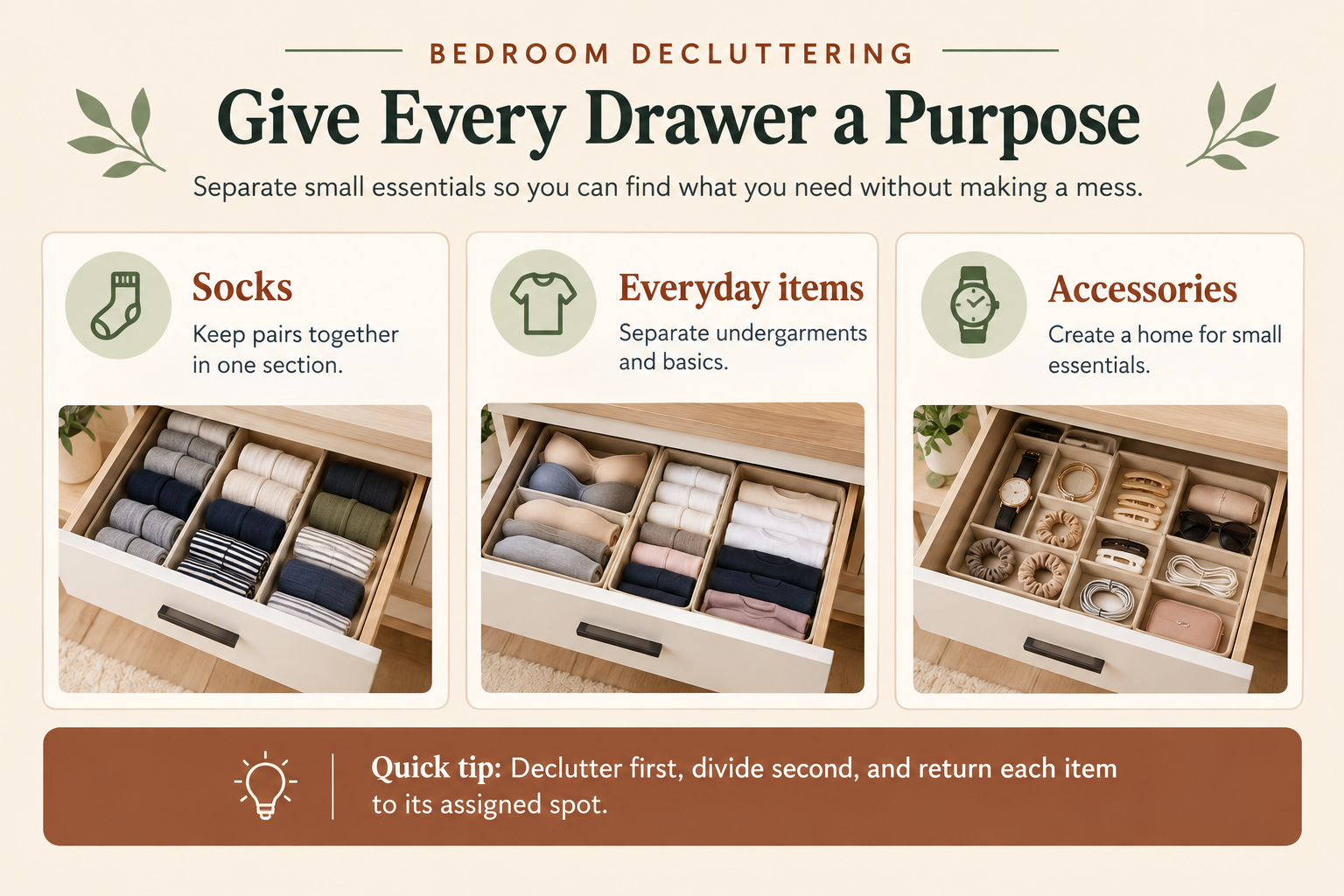
This is a simple decluttering idea for bedrooms where socks, undergarments, accessories, and other small items tend to get mixed together. You don’t need expensive organizers. Small boxes or adjustable dividers can work just as well.
How to make it work:
- Group similar items together, such as socks, belts, and everyday accessories.
- Give each category its own section.
- Keep frequently used items near the front.
- Remove anything you no longer wear or need before organizing.
Start with just one drawer. Once everything has a place, putting items away becomes much easier.
7. Declutter Before You Start Organizing
It’s tempting to buy storage baskets and rearrange shelves as soon as a room feels messy. But organizing items you no longer need can leave you with crowded cupboards and containers full of clutter.
Organize Second.
The First, clear the space. Next, decide what deserves to stay. Then group similar belongings and return them to their proper places.
Follow these 4 steps to make bedroom decluttering easier:
- Clear the space: Take items out of the area you want to tackle.
- Sort honestly: Create separate piles for things to keep, donate, and discard.
- Group similar belongings: Put clothing, accessories, books, and office supplies together.
- Put everything back: Give each category a clear, practical home.
Work on one shelf, drawer, or small section at a time if clearing the entire room feels overwhelming. You’ll know what storage you actually need once you’ve removed the excess.
8. Start Small and Use Baskets to Control Everyday Clutter
Decluttering an entire home can feel like too much work, especially when several rooms need attention. A simpler approach is to tackle one small area at a time, such as a single drawer, a bookshelf, or the top of a coffee table.
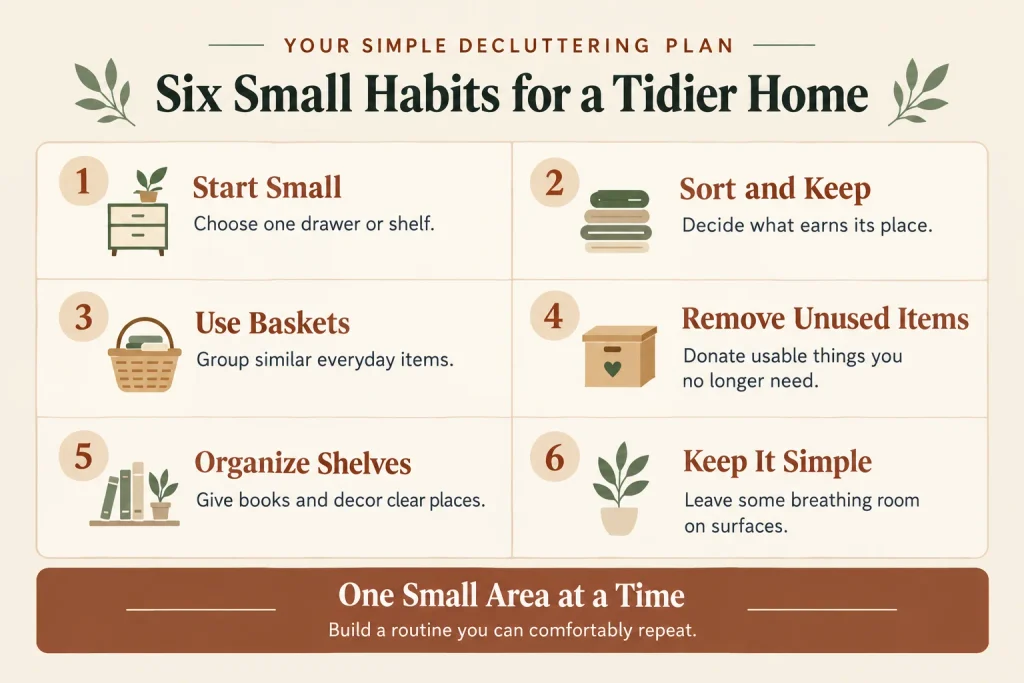
These six practical habits: start small, sort items, use baskets, remove unused belongings, organize shelves, and keep the overall setup simple.
Baskets are especially useful for gathering items that belong together. In a living room, one can hold books and magazines.
On a bedroom shelf, a basket can keep accessories or everyday essentials from spreading across the surface. Choose containers that fit the space rather than buying them before you know what needs storing.
Try this simple routine:
- Choose one small area to declutter.
- Separate the items you use from those you no longer need.
- Group similar belongings together.
- Put the remaining items in sensible storage.
- Keep surfaces simple enough to tidy quickly.
The goal isn’t to hide everything in containers. It’s to make your belongings easier to manage and your rooms easier to maintain.
9. Use Vertical Space, Baskets, and Storage Zones to Reduce Clutter
A tidy home doesn’t need more floor space. It often needs a better way to use the space you already have.
These are brings together several practical organizing ideas for different parts of the home. Under-bed drawers store extra clothes and bedding, wardrobe baskets keep belongings grouped, and clear jars make pantry items easier to see.
Elsewhere, wall organizers free up desk space, a small entryway station keeps everyday essentials together, and matching baskets give folded blankets a neat home.
The best part is that these ideas solve different clutter problems without relying on one storage method everywhere.
Where each idea works best:
- Bedroom: Store seasonal clothing or spare bedding under the bed.
- Wardrobe: Use baskets to group accessories and smaller items.
- Kitchen: Keep frequently used dry goods in clearly visible containers.
- Bathroom: Limit countertops to everyday essentials.
- Home office: Move supplies onto wall-mounted organizers.
- Entryway: Create one designated spot for keys, bags, and shoes.
- Living room: Gather blankets in a basket near the sofa.
Choose storage that fits your belongings and available space. Containers should make things easier to find, not give you a reason to keep unnecessary items.
7 Smart Ways to Make Space at Home
Match each storage solution to the clutter you want to control.
| Area | Try This | Best For |
|---|---|---|
| Bedroom | Under-bed drawers | Extra bedding |
| Wardrobe | Storage baskets | Accessories |
| Kitchen | Clear jars | Dry goods |
| Bathroom | Small trays | Daily essentials |
| Office | Wall organizers | Desk supplies |
| Entryway | Drop zone | Keys and bags |
| Living room | Matching baskets | Throws and blankets |
10. Create a Simple Organizing System for Every Room
A home is easier to keep tidy when each room has a clear purpose and a few simple rules. This shows how small organizing habits can work throughout the house, from keeping shoes near the entryway to sorting pantry goods into matching containers.

The key is to give everyday items a place that makes sense for how you use them. Keep bags near the door, group remotes and books in the living room, store bathroom essentials in small bins, and keep your desk clear of papers you no longer need.
Here are three habits worth starting with:
- Give everything a home: Store frequently used items where you naturally reach for them.
- Reset regularly: Spend a few minutes returning misplaced belongings to their proper places.
- Keep only what you use: Review crowded shelves and drawers before adding more storage.
You don’t need to organize every room in one weekend. Pick the area that causes the most frustration and build your system there first.
What is the fastest way to declutter an entire room?
The quickest way to declutter a room is to work in small sections and make decisions as you go.
Start by removing rubbish, collecting items that belong elsewhere, and separating belongings you want to keep, donate, or discard. Then focus on one area at a time, such as a bedside table, wardrobe, or bookshelf.
Avoid pulling everything out of every cupboard at once, as this can leave you with a bigger mess than you started with.
Once you’ve removed the unnecessary items, return the remaining belongings to their designated places. If you’re short on time, begin with the most visible clutter and clear the floor and main surfaces first.
How can you declutter your house fast?
To declutter your house quickly, focus on the areas that affect your daily routine most. Entryways, kitchen counters, living room surfaces, and bedroom floors are good places to begin. Keep a donation bag and a rubbish bag nearby so you can sort items without making repeated trips.
Use a simple rule: keep what you use, remove what you no longer need, and give everything else a clear place. Work through one room before moving to another, and avoid shopping for storage containers until you know what you actually need. A short, regular tidying session can also prevent clutter from returning.
What are the biggest decluttering mistakes?
One common mistake is organizing belongings before deciding what to keep. This often leads to crowded drawers, overfilled baskets, and storage spaces that are difficult to maintain.
Another is trying to declutter the whole house in one session, which can cause frustration and unfinished piles.
Other mistakes include keeping things out of guilt, buying organizers too early, and creating storage systems that are inconvenient to use.
To avoid these problems, start with a manageable area, make honest decisions about your belongings, and choose simple storage solutions that fit your everyday habits.
What is the hardest thing to get rid of when decluttering?
For many people, the hardest things to part with are sentimental belongings, gifts, inherited items, and objects connected to important memories.
These items can feel difficult to release because their emotional value goes beyond their practical use.
You don’t need to discard meaningful possessions just to create a tidy home. Instead, choose a few items that matter most, display or store them thoughtfully, and let go of duplicates or things you no longer feel connected to.
For expensive or potentially useful belongings, consider whether you realistically expect to use them again.
Decluttering is about making room for what matters, not getting rid of everything.
Conclusion
A more organized home starts with small, thoughtful decisions. Drawer dividers can keep everyday essentials in order, baskets can contain loose belongings, and vertical storage can free up valuable floor space. Most importantly, decluttering before organizing helps you avoid storing things you no longer need.
You don’t have to tackle every room at once. Choose one drawer, shelf, or surface and work through it at your own pace. Once you find a system that works for your household, make it part of your regular routine.
Save these simple decluttering ideas for your next home refresh, and revisit them whenever a room starts to feel crowded again.